Seeing the northern lights in Fairbanks with kids
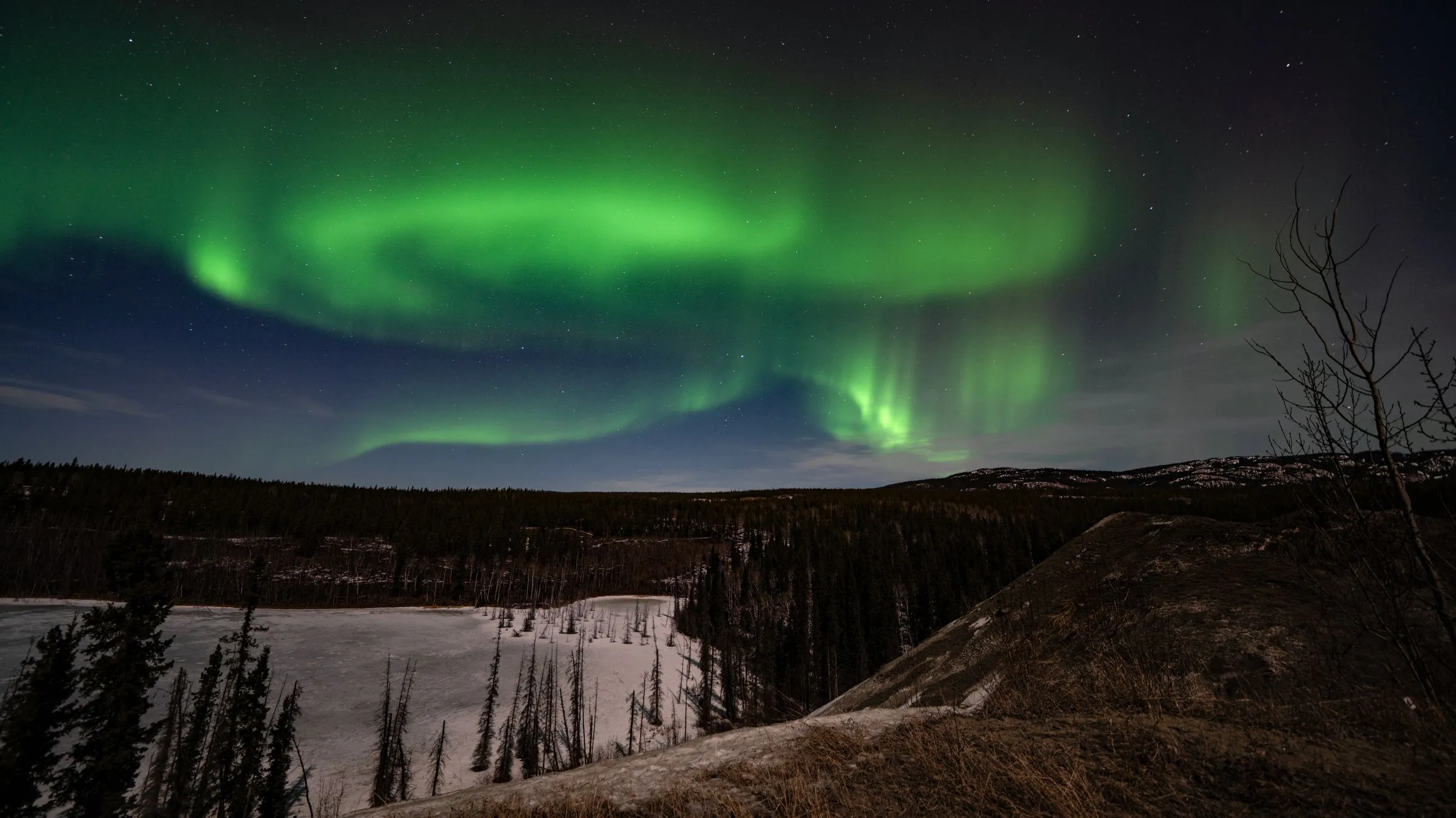
Fairbanks sits under the auroral oval, the ring around the top of the world where the northern lights show up most often. That makes it one of the best places on earth to see them. It doesn’t make them a sure thing, and it doesn’t make it easy to keep a seven-year-old awake and warm at one in the morning. Here’s how families do it.
When to come
The aurora season in interior Alaska runs from late August to mid-April. Outside those months the nights are too short or too light.
- Late August to September. The first dark nights. Mild temperatures, fall colors, and you can watch from a deck in a jacket. The lights are there, but nights are shorter.
- October to February. The longest, darkest nights. Also the coldest. Minus 20°F is normal and minus 40°F happens.
- March. A favorite with families. The deep cold eases, the days are long enough to do things, and the nights are still properly dark.
Stay at least three or four nights if you can. The lights depend on clear skies as much as anything, and a single night is a coin toss.
When in the night
The lights can show up any time it’s dark, but the stretch from around 10 pm to 2 am is the most reliable. For kids, that’s the hard part. What works:
- A big afternoon nap. Treat the evening like a late flight.
- Watch from inside. Staying somewhere dark and out of town, with a window facing north, means you can wait on the couch and go out when it starts. That’s why Aurora House is in the Goldstream Valley and not in town.
- Set an alarm. If the little ones go to bed, a grown-up can watch the sky and wake everyone when it’s worth it.
Read the forecast
The University of Alaska Fairbanks publishes an aurora forecast, and it’s worth checking each day. But the forecast is only half of it. You also need a clear sky (check the cloud forecast) and darkness, so get away from town lights, and a bright full moon will wash out faint displays.
Dress for it
Cold is what ends the night, not boredom. For everyone, including the grown-ups:
- Insulated boots, not sneakers, with wool socks
- Long underwear, then fleece, then a proper parka
- Mittens, which are warmer than gloves, and a hat that covers the ears
- Hand warmers in pockets
Phones lose charge fast in the cold. Keep them in an inside pocket and bring a spare battery.
Taking pictures
Modern phones are good at the aurora. Use night mode, rest the phone on something solid or use a small tripod, and hold still for the full exposure. Kids love being the ones who take the picture, so let them.
The easy way to do it
Our Northern Lights Night takes care of the driving, the dark spot and the warm room to wait in, with cocoa. If the forecast looks poor, we’ll say so and help you move to a better night.